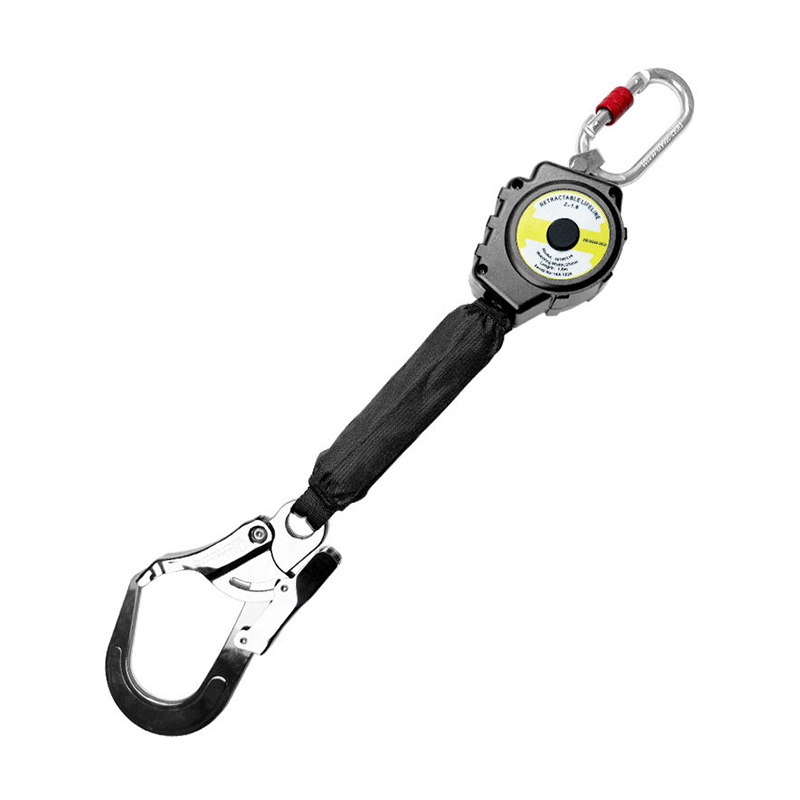
What is a webbing fall arrester?
A webbing fall arrester is a type of personal protective equipment (PPE) used for safety during work at heights. It primarily consists of a high-strength webbing, a safety hook, a buffer, and an adjustment mechanism. Its core function is to quickly arrest and absorb the impact of a worker's fall, thereby preventing serious injury. Compared to wire rope fall arresters, webbing fall arresters are lighter, more flexible, and easier to wear and operate. They are widely used in high-altitude work applications such as construction, communication tower inspection and maintenance, power plant maintenance, and wind power operation and maintenance.
What are the main structural features of a webbing fall arrester?
The structural design of a webbing fall arrester directly determines its safety performance and user experience during work at heights. To achieve high-strength support, impact absorption, and flexible operation in fall protection, webbing fall arresters typically consist of multiple core components, each of which undergoes precise design and rigorous testing to meet international safety standards. These components must ensure reliability in extreme environments while also ensuring comfort and ease of use, providing comprehensive protection for workers in various height-based work scenarios.
High-strength webbing: The high-strength webbing is the primary load-bearing component of a webbing-type fall arrester, directly determining the load-bearing capacity and durability of the entire fall arrest system. It is typically made from high-strength industrial fibers such as polyester or aramid. These materials not only offer excellent tensile strength (capable of withstanding thousands of kilograms of force) and abrasion resistance, but also offer excellent flexibility, ensuring a non-restrictive feel when worn. For work environments like welding and cutting where sparks are a risk, high-end models incorporate a flame-retardant coating on the webbing surface to effectively enhance its resistance to high temperatures and combustion, ensuring the webbing maintains its structural integrity even under extreme working conditions.
Energy absorber: The energy absorber is a critical safety feature of a fall arrester. Its primary function is to absorb and disperse the impact energy of a fall, minimizing any potential harm. These typically feature a tear-away design. Upon impact, the webbing inside the bumper gradually tears at a controlled rate, extending the braking distance and effectively reducing the impact on the worker's waist and spine. High-quality bumpers can limit impact forces to below 6kN, complying with international standards such as EN 355 and ANSI Z359. This ensures safe arrestment without causing secondary injuries.
Hook (Karabiner): The hook is a critical component connecting the fall arrester to the anchor point. Its strength and reliability are directly related to the safety of the entire protection system. Typically constructed of high-strength alloy steel or lightweight aluminum alloy, it offers a static tensile load capacity exceeding 15kN while maintaining a lightweight and highly durable design. Hooks are often equipped with an automatic locking mechanism to prevent unintended detachment due to impact or vibration. Furthermore, the hook is galvanized or anodized for enhanced rust and corrosion resistance, making it suitable for long-term outdoor exposure.
Adjustment and Retraction Mechanism: To enhance operational flexibility and safety, some webbing fall arresters are equipped with adjustment and retraction mechanisms. Among the more advanced designs is the self-retracting design. This mechanism automatically adjusts the webbing length based on the worker's movements, maintaining a slight tension and significantly reducing the free distance and swing amplitude of a fall. The spring and brake system within the retraction mechanism are precisely coordinated, ensuring rapid response to the user's movements and rapid locking at the moment of a fall. Furthermore, the adjustment function allows users to flexibly adjust the webbing length to suit different working heights and spatial environments, enhancing operational comfort and safety.
What are the practical application scenarios of webbing fall arresters?
Due to their lightness, flexibility, and high strength, webbing fall arresters are widely used in high-altitude operations across various industries. They not only effectively reduce the risk of falls but also provide workers with greater flexibility and comfort while ensuring safety. Whether in construction, power and telecommunications, wind power plant operation and maintenance, or industrial maintenance and warehousing, webbing fall arresters play an irreplaceable role and are a crucial component of height-based work safety systems.
Construction: In the construction industry, webbing fall arresters are commonly used in high-altitude work scenarios such as scaffolding erection, steel structure installation, roof waterproofing installation, and exterior wall construction. By combining the fall arrester with a safety harness and fixed anchor points, construction workers can effectively prevent falls caused by slips and other accidents. Its lightweight design allows workers to move and change positions with ease, while the soft webbing reduces friction with building materials, improving work efficiency and comfort.
Power and telecommunications industries: In power and telecommunications operation and maintenance, webbing fall arresters are particularly suitable for high-altitude work such as climbing utility poles and inspecting communication towers. Compared to traditional steel cable fall arresters, the webbing is lighter and more flexible, reducing the weight burden on workers during climbing. The fall arrester, combined with a safety hook and buffer device, can quickly activate the brakes in the event of an accidental fall, effectively reducing impact force and protecting workers from serious injury. Its convenient storage and portability also make field work more efficient and convenient.
Wind turbine operation and maintenance: Wind farm towers are cramped and tall, and turbine blade maintenance often requires operations at heights of tens or even hundreds of meters. The flexible structure and automatic retraction function of a webbing fall arrester allow operators to maneuver flexibly within confined spaces, while reducing the free fall distance and improving safety. Furthermore, the webbing material is less likely to scratch the tower's interior, making it ideal for long-term maintenance of wind turbine equipment and extending the lifespan of both the equipment and the protective device.
Industrial maintenance and warehousing: Webbing fall arresters provide reliable protection from falls from heights during factory equipment inspection, pipeline maintenance, and warehouse high-bay racking. They maintain ample freedom of movement when maneuvering between large pieces of machinery or working on narrow platforms, without compromising operational flexibility. The webbing material is highly adaptable to the working environment and can withstand common industrial contaminants such as oil and dust. It is also easy to clean and maintain, making it suitable for frequent use.
What precautions should be taken when using and maintaining a webbing fall arrester?
Webbing fall arresters play a critical role in protecting workers' lives during aerial work. Their use and maintenance are directly related to their effectiveness and lifespan. Proper operating habits, meticulous daily inspections, scientific cleaning and storage methods, and timely replacement are essential to ensure stable, safe, and reliable performance. Whether in construction, wind turbine maintenance, or aerial installation, adhering to proper use and maintenance regulations can effectively reduce the risk of equipment failure and ensure operational safety.
Regular Inspection: Before each use, a comprehensive visual and functional inspection of the webbing fall arrester is essential. Carefully inspect the webbing surface for cuts, wear, loose fibers, or discoloration due to UV aging. These damages can significantly reduce its load-bearing capacity. At the same time, check the moving parts of the safety hook to ensure smooth opening and closing and a secure locking mechanism to prevent the risk of fall-off due to binding or lock failure. If necessary, refer to the manufacturer's checklist to confirm that all components of the fall arrester are in good condition.
Avoid sharp corners: During high-altitude work, prolonged contact between the webbing and steel beams, concrete corners, or sharp metal edges can easily lead to cuts or abrasions, thereby weakening its load-bearing capacity. Therefore, avoid running the webbing directly over sharp corners or rough surfaces. If such contact is necessary, it is recommended to use corner pads or protective covers to isolate the webbing from mechanical damage during operation. This practice can effectively extend the life of the equipment and prevent serious accidents caused by breakage at critical moments.
Cleaning and Storage: After use, remove dirt, oil, or chemicals from the webbing surface to prevent corrosion and degradation. It is recommended to use a mild neutral detergent and rinse thoroughly with clean water. Avoid using chemical cleaners containing solvents. After cleaning, webbing should be air-dried in a cool, well-ventilated area. Avoid direct sunlight or exposure to high heat sources to prevent damage to the fiber structure. When storing, place the fall arrester in a dry, clean, dedicated storage bag or tool cabinet, away from acidic and alkaline chemicals and sharp objects, to ensure optimal condition for next use.
Regular replacement: Even if the fall arrester appears intact, its internal materials may degrade over time due to fatigue and environmental factors. According to international standards and manufacturer recommendations, webbing fall arresters should generally be replaced after five years of continuous use. If the device has experienced a drop impact, it must be replaced immediately, regardless of any external damage. This is because impact can cause irreversible stress damage to the internal fiber structure, significantly reducing protective performance even if the surface remains intact. Timely replacement of the device is the last line of defense for ensuring safety.


 English
 русский
 Español
 عربى
عربى