Structural Composition and Key Design Features of the Half-Body Safety Harness
The webbing is the primary structural element of a
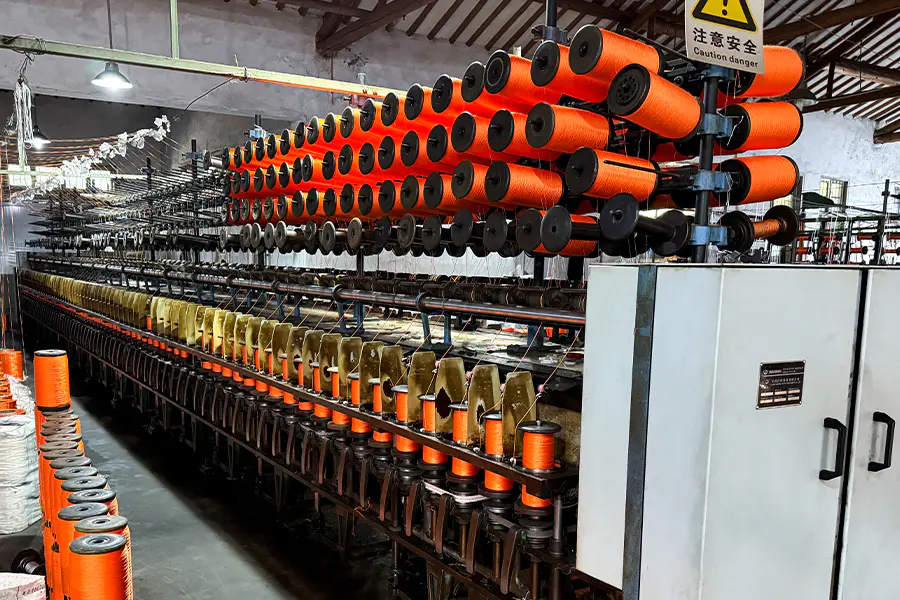
half-body safety harness, and its material composition directly affects strength, durability, and flexibility. Professional-grade harnesses typically utilize high-tensile polyester, polyamide (nylon), or advanced blends incorporating aramid fibers for specialized applications. Polyester offers excellent resistance to UV degradation, minimal stretch under load, and strong abrasion resistance, making it ideal for outdoor industrial environments. Nylon provides slightly higher elasticity, which can improve comfort during movement, though it absorbs more moisture, which can affect performance in humid conditions. Aramid fibers, such as Kevlar, are often incorporated when additional flame resistance or extreme tensile strength is required, particularly in environments involving welding, cutting, or hot work. The weave structure of the webbing is equally significant—tightly woven flat webbing resists wear from hardware and edges, while tubular webbing can offer increased flexibility and resistance to fraying. Load capacity is measured through tensile strength testing, often conducted according to international standards such as EN 358 or ANSI Z359. Professional harnesses can withstand forces well above 22 kN, providing a significant margin of safety. Manufacturers also apply protective coatings to webbing fibers to enhance resistance against oil, chemicals, and environmental contaminants. The production process involves precision-controlled looms to ensure uniform fiber alignment and consistent thickness throughout the webbing, minimizing weak points. Regular in-house testing, such as cyclic loading and abrasion simulation, helps verify that the webbing maintains integrity over repeated use cycles. In advanced manufacturing setups like those at Jiangsu Senmao Safety Technology Co., Ltd., quality checks are implemented at multiple production stages, supported by automated inspection systems and skilled technicians, ensuring the final product maintains optimal strength-to-weight ratios without sacrificing flexibility or wearer comfort.
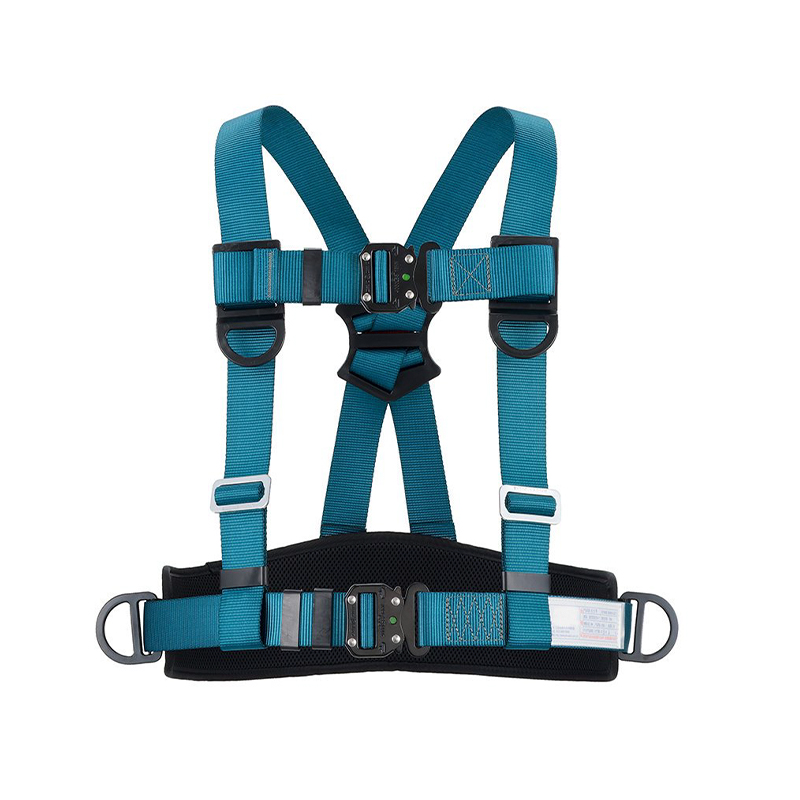
The waist belt serves as the core anchoring component for the half-body safety harness, providing both load distribution and user stability during suspended work. A well-designed belt must balance rigidity for load transfer with softness for comfort. Many professional designs incorporate a dual-layer construction: an internal stiffener made from high-density polyethylene (HDPE) or light aluminum alloy to maintain shape and distribute forces evenly across the lower back, combined with an outer layer of closed-cell foam padding covered in durable fabric for comfort. This arrangement reduces the likelihood of pressure points, which can cause discomfort or circulation restriction during extended use. Width is another important factor—wider belts provide greater surface area for force distribution, but must remain flexible enough to allow natural torso movement. The attachment of the waist belt to the leg loops via reinforced webbing pathways ensures that the entire harness functions as a unified system, transferring loads efficiently without twisting or shifting. Adjustability is provided through side buckles, often constructed from anodized aluminum or stainless steel for corrosion resistance, with quick-lock mechanisms that prevent slippage under load. The waist belt may also feature integrated gear loops for carrying tools and accessories, placed strategically so they do not interfere with movement or harness function. At Jiangsu Senmao Safety Technology Co., Ltd., waist belts are designed with ergonomic shaping informed by anthropometric data, allowing the belt to contour to our body’s natural curves. The production process involves high-precision stitching machines capable of applying consistent tension to the thread, ensuring that stress points such as buckle attachments and webbing junctions remain secure under high loads. Final inspection includes dimensional verification, buckle operation testing, and simulated use scenarios to confirm that the belt provides both mechanical strength and wearer stability across varied working conditions.
Leg loops are fundamental to the harness’s function, as they bear a significant portion of the load in fall arrest and work positioning scenarios. Their design must ensure that forces are transmitted through the thighs without causing excessive compression or circulation issues. Typically, leg loops are constructed from the same high-strength webbing as the waist belt but often feature additional padding to improve comfort during suspension. Padding materials are chosen for their resilience, moisture resistance, and quick-drying capabilities, as harnesses may be exposed to sweat, rain, or other environmental moisture. Leg loops are connected to the waist belt through reinforced junctions, often using multi-layer bar-tack stitching, which disperses stress and prevents tearing at high-load points. Adjustability is achieved through friction buckles or quick-release systems, allowing us to don and doff the harness without fully rethreading straps. Quick-release mechanisms are particularly advantageous in rescue scenarios, where speed of removal can be critical. High-quality buckles are CNC-machined or precision-forged from aluminum alloy or stainless steel, ensuring they retain functionality after prolonged exposure to environmental stress. The geometry of the leg loops is designed to match human anatomy, preventing strap migration during movement. At Jiangsu Senmao Safety Technology Co., Ltd., leg loop construction is subject to repeated dynamic drop testing and fatigue cycling to verify long-term performance under repeated loading and unloading conditions. Each production batch undergoes dimensional accuracy checks, webbing abrasion resistance tests, and buckle locking strength assessments to ensure reliable performance in demanding environments.
The primary attachment point is the harness’s critical connection to fall arrest or positioning systems. This point is typically located at the front waist area, made from either forged alloy steel, stainless steel, or reinforced textile loops. Its position is carefully engineered to keep our body upright in suspension, which reduces the risk of orthostatic intolerance during prolonged hangs. In multi-application harnesses, additional attachment points may be included for belaying, rappelling, or side positioning. All attachment points must meet rigorous strength requirements, typically rated to at least 15–23 kN, depending on applicable standards. The load path—the route through which forces travel from the attachment point through the webbing and into our body—is engineered to minimize twisting, uneven loading, and shear forces. Manufacturers like Jiangsu Senmao Safety Technology Co., Ltd. achieve this through computer-aided design (CAD) simulations combined with practical drop testing. Attachment hardware is treated with corrosion-resistant finishes such as anodizing, galvanizing, or passivation, depending on the base metal, to ensure long-term durability. Textile attachment loops are protected by abrasion-resistant sheaths to reduce wear from repeated hardware clipping. The integration of the attachment point into the harness’s structure is reinforced through multiple rows of high-strength stitching, ensuring that even if one stitch line fails under stress, others will continue to bear the load.
The integrity of a harness depends heavily on stitching, which binds all components together into a unified system. Professional half-body harnesses use bar-tack stitching, zigzag reinforcement, and in some areas, box-X stitching to maximize load-bearing strength. The choice of thread is critical—bonded polyester and nylon threads are common for general use, while aramid threads may be used for high-heat environments. Thread tensile strength is typically tested to over 1000 N, ensuring it can withstand the forces encountered in fall arrest scenarios. Contrasting stitch colors are often used to facilitate visual inspections, allowing us to identify damaged areas more easily. In manufacturing facilities such as Jiangsu Senmao Safety Technology Co., Ltd., stitching is carried out on programmable sewing machines that ensure uniform thread tension and precise pattern placement. Each harness undergoes post-production inspection where critical seam locations are load tested to verify strength. This level of quality control ensures stitching maintains its integrity even after repeated cycles of use, cleaning, and environmental exposure.


 English
 русский
 Español
 عربى
عربى